Disposable Camera Alternatives for Weddings
Discover the best disposable camera alternatives for weddings in 2026. From QR code photo sharing to instant cameras, find the perfect solution for your big day.
By Guest Clicks Team · · 12 min read
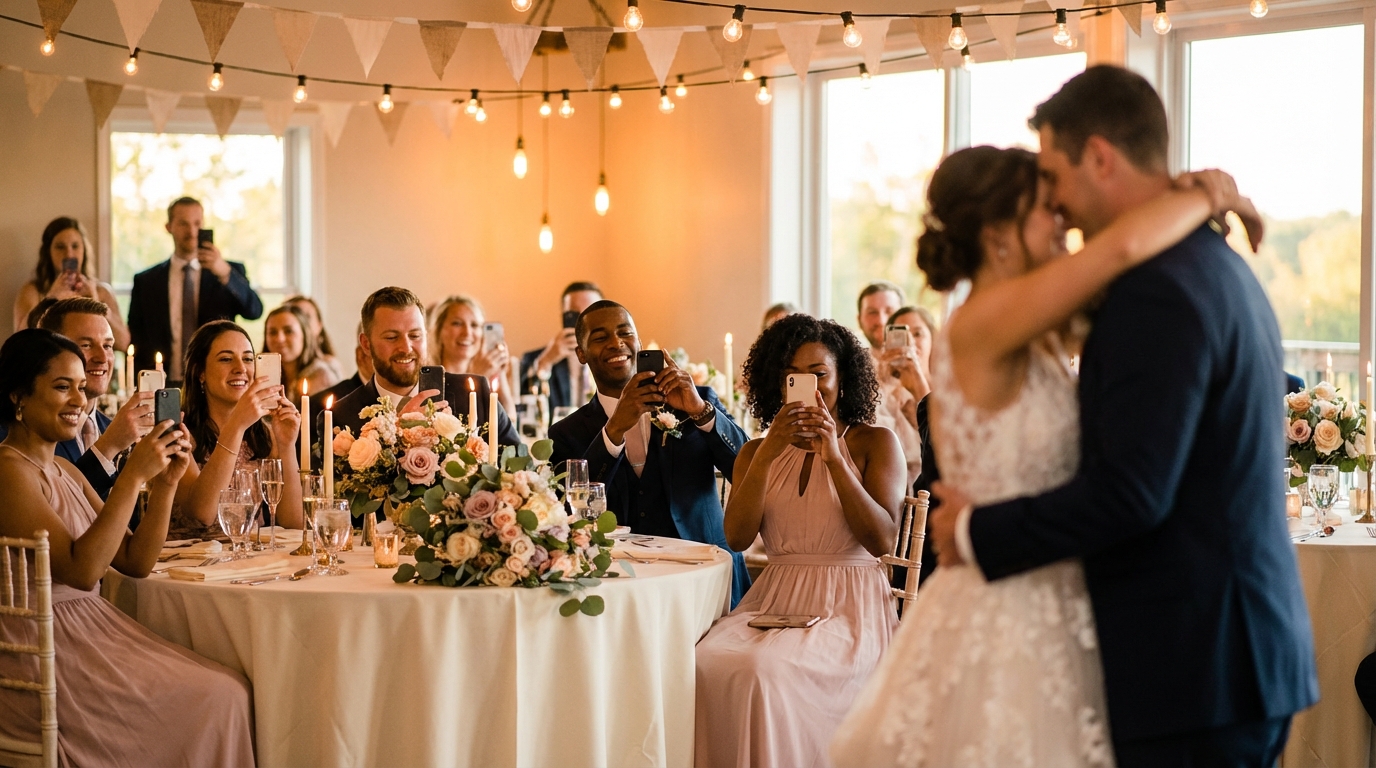
There's something undeniably charming about the soft, grainy aesthetic of disposable camera photos. For years, couples have placed these little plastic boxes on reception tables, hoping to capture candid moments from their guests' perspectives. The crack of the flash, the winding of the film wheel, the anticipation of not knowing what you've captured until weeks later—it's a tradition steeped in nostalgia. But as we move through 2026, more couples are realizing that while the idea of disposable cameras is romantic, the reality often falls short. Between development costs, missing cameras, and the agonizing two-to-three-week wait to see if your guests actually took any photos, the traditional approach is showing its age. Thankfully, modern disposable camera alternatives for weddings offer all the candid charm without the logistical headaches.
Why Couples Are Moving Beyond Traditional Disposable Cameras
Let's start by acknowledging what disposable cameras do well. They create intentionality—guests know they only have 27 shots, so they make them count. They capture a specific aesthetic that's difficult to replicate with digital filters. And they encourage guests to participate actively in documenting your day rather than passively scrolling through their phones.
But here's where the romance meets reality. When you actually run the numbers, disposable cameras become significantly less appealing. Let's say you're planning a 150-guest wedding and want decent coverage. You'll need about 10 cameras placed strategically around your venue. At roughly $18 per camera, you're already at $180. Then comes development—typically $15 to $20 per camera depending on your location and whether you want digital scans. Suddenly, you're looking at $330 to $380 for what will likely be 200 to 270 photos, if you're lucky.
And that's the optimistic scenario. In reality, disposable cameras suffer from what event planners call the "missing photo" problem. Three of your cameras might sit barely touched on the table because guests forgot about them. Two might accidentally get taken home by enthusiastic guests. One could have a film loading issue you won't discover until after the honeymoon. You've now lost 60% of your investment before a single photo gets developed.
Then there's the timeline issue. You get married on Saturday, leave for your honeymoon on Monday, and return two weeks later to find... nothing. The film is still at the lab, or sitting in a drawer somewhere, or the scans arrive via email when you're already deep into thank-you card writing and have mentally moved on from the wedding high. The immediate gratification of seeing your guests' perspectives—those dancing shots, the behind-the-scenes getting-ready moments, the reactions during toasts—simply doesn't exist with film.
The average couple receives 250-300 guest photos when using disposable cameras, but 450-600 photos when using QR code sharing—the difference is elimination of friction and film limitations.
QR Code Photo Sharing: The Closest Digital Alternative
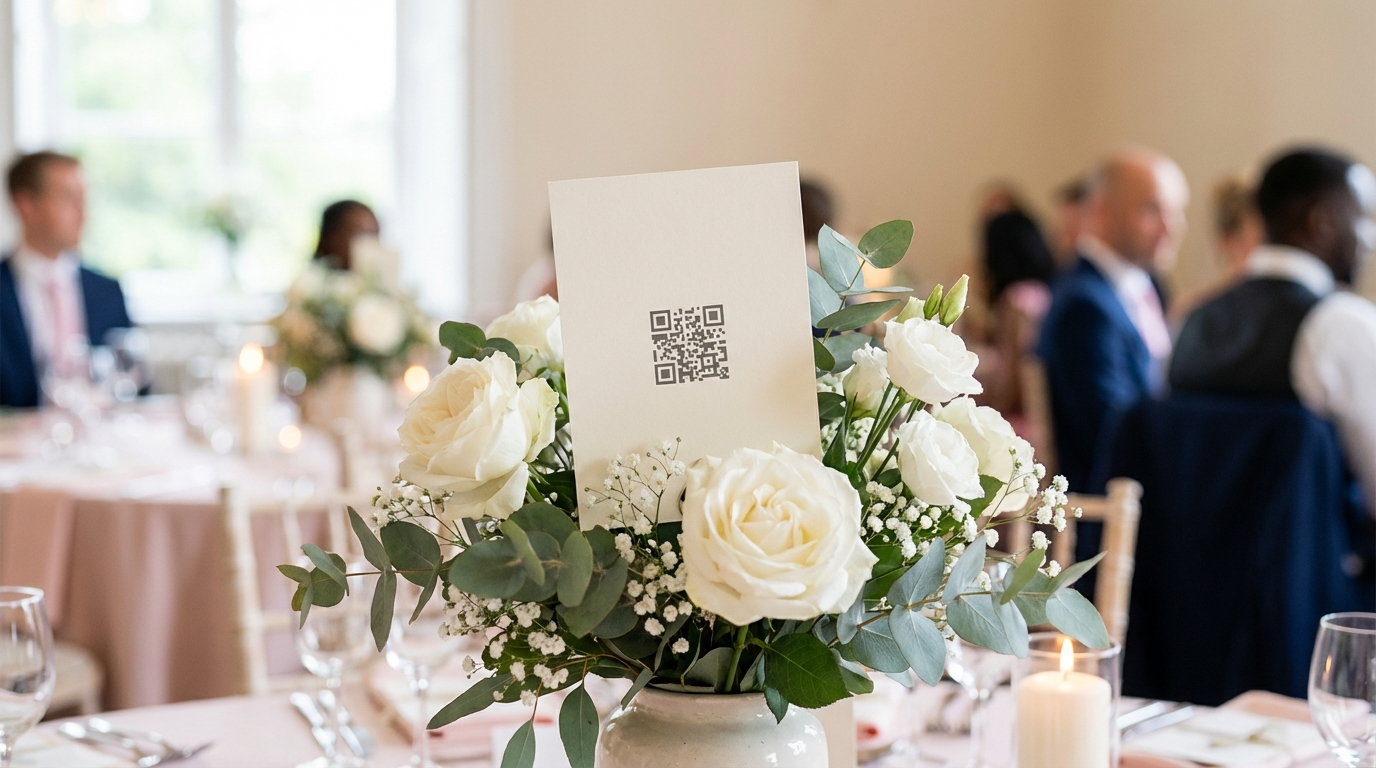
If you love the concept of guest-contributed photography but hate the limitations of film, QR code-based photo sharing represents the most elegant solution available in 2026. Here's how it works: you create an event, receive a unique QR code, and display it at your wedding. Guests simply point their phone cameras at the code, which opens their browser instantly—no app download required, no account creation, no password to remember. They select their photos, upload them, and within seconds, those images appear in a shared gallery that you can view in real-time.
The immediate gratification factor cannot be overstated. Picture this: you're sitting in your hotel room the morning after your wedding, still wearing your robe with coffee in hand, scrolling through 150 photos your guests uploaded the night before. You see your grandmother laughing during the best man's toast, your college friends' perspective of your first dance, and that moment when your niece caught the bouquet—all before you've even written your thank-you notes.
From a budget perspective, QR code solutions are remarkably accessible. Platforms like Guest Clicks offer free plans perfect for intimate gatherings (up to 100 photos), while premium plans run about $49 per year for unlimited photos and video uploads. Compare that to the $330-380 you'd spend on disposable cameras, and the math becomes compelling quickly.
Perhaps most importantly, modern QR code platforms include moderation tools. Unlike disposable cameras where you get whatever was shot—whether it's an unflattering angle, a photo of someone's thumb, or something truly inappropriate—you can review photos before they go live or remove them afterward. This control ensures your wedding gallery reflects the celebration you actually want to remember.
📸 Collect Every Guest Photo at Your Next Event
Stop chasing guests for photos. With Guest Clicks, you create a QR code, guests scan and upload — it's that simple. No app downloads, no hassle.
Instant Cameras: When You Want Physical Photos Immediately
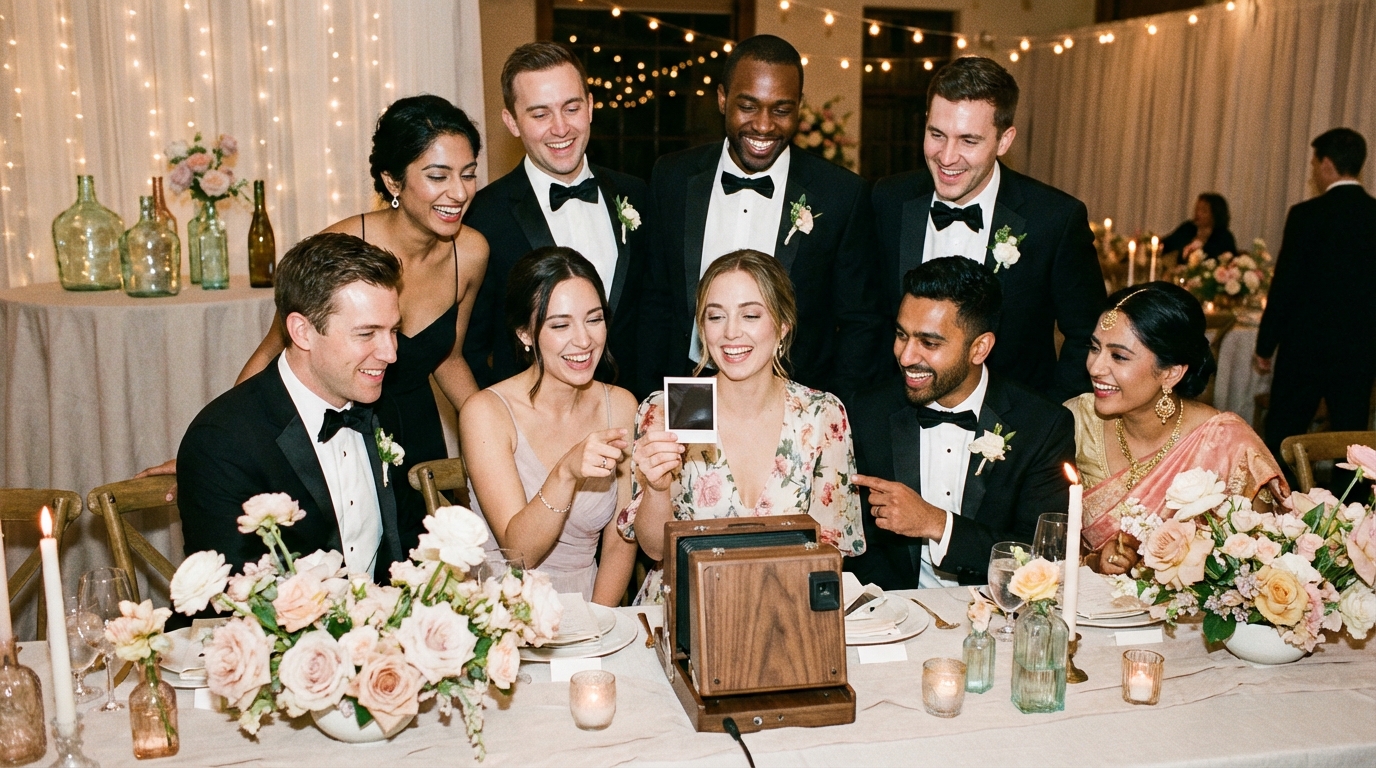
For couples who crave the tactile experience of holding a physical photo but want to skip the development wait, instant cameras like Fujifilm Instax and modern Polaroid cameras offer a compelling middle ground. There's genuine magic in watching a photo develop in your hands seconds after the shutter clicks, and these cameras provide immediate gratification that disposable cameras simply cannot match.
The economics here vary significantly based on your approach. If you purchase cameras outright, expect to spend $70 to $120 per unit. Film packs run roughly $0.75 to $1.00 per photo, meaning a wedding with 150 instant photos costs $200 to $250 in film alone. Some couples opt to rent instant cameras instead, which can reduce costs if you're only using them for one event.
Instant cameras also bring back that intentional shooting that makes disposable cameras special. When guests know each photo costs nearly a dollar and there's a limited supply of film, they tend to compose their shots more carefully. The result is often higher-quality, more thoughtfully captured moments rather than rapid-fire digital snapping.
Many savvy couples are adopting a hybrid approach: placing instant cameras at a dedicated guest book station where guests take one photo for themselves and add a duplicate to your guest book with a handwritten message, while using QR code sharing for unlimited digital uploads throughout the venue. This strategy gives you the best of both worlds—the nostalgic keepsake of instant film plus the comprehensive digital archive of a modern platform.
Dedicated Photo Sharing Apps vs. Browser-Based Solutions
When researching disposable camera alternatives for weddings, you'll inevitably encounter dedicated wedding photo apps like WedPics, Appy Couple, or The Knot's proprietary solutions. These platforms offer robust features—customizable layouts, guest messaging, integrated registries—but they come with a significant hidden cost: the adoption barrier.
Here's the reality that app developers don't advertise: approximately 30 to 40 percent of your guests simply won't download a dedicated app for your wedding, regardless of how many times you mention it on your invitation or wedding website. For older guests, the process of navigating the App Store, creating accounts, and remembering passwords creates friction that kills participation. For younger guests, phone storage concerns and privacy permissions feel invasive.
The data tells a clear story. At a wedding with 120 guests, an app-based solution might see 45 downloads and 28 active uploaders, yielding perhaps 180 photos from less than 25 percent of your guest list. The same wedding using a browser-based QR code solution typically sees 85 guests uploading photos—simply because there's no barrier to entry beyond pointing a camera at a code.
That said, apps do make sense in specific scenarios. If you're hosting a destination wedding where guests will be together for multiple days, an app creates an ongoing connection point. If your guest list skews heavily tech-savvy and younger, adoption rates improve significantly. But for the typical mixed-generation wedding guest list, browser-based solutions like Guest Clicks eliminate the friction that kills participation.
In 2026, 73% of wedding guests report they're more likely to share photos if they don't need to download an app, according to event technology surveys—browser-based solutions see 2.5x higher participation rates.
Traditional Photo Booths and Digital Alternatives
Professional photo booth rentals have evolved far beyond the cramped boxes of the early 2000s. Today's options include 360-degree video booths, slow-motion capture stations, green screens with digital backgrounds, and open-air setups with professional lighting. Rentals typically run $400 to $1,200 depending on your location and the sophistication of the equipment, with most packages including unlimited prints, digital delivery, and an attendant to manage the flow.
The value proposition here differs from candid guest photography. Photo booths are entertainment first, documentation second. They give guests an activity during cocktail hour, provide ice-breakers for tables that don't know each other well, and create shareable content for social media. The photos tend to be higher quality than phone snapshots, with professional lighting and backdrops that match your wedding aesthetic.
For budget-conscious couples, DIY digital photo booths offer a viable alternative. Using an iPad or tablet with a photo booth app ($50 to $150 for quality software), a ring light, and a simple backdrop, you can create a functional photo station for under $200. The trade-off is reliability—without an attendant, the tablet might get moved, the lighting adjusted incorrectly, or guests might struggle with the interface.
Rather than viewing photo booths as competing with other disposable camera alternatives for weddings, consider them complementary. The booth captures staged, polished moments with props and poses, while QR code sharing or instant cameras capture the authentic, candid interactions happening organically throughout your venue. Wedding planning experts often recommend combining these approaches for comprehensive coverage.
How to Choose the Right Alternative for Your Wedding
With so many options available, how do you decide which approach fits your specific celebration? Start by honestly assessing your guest demographics. A wedding with 50 guests averaging 60 years old requires different technology than a 200-person celebration of millennials and Gen-Z attendees. For older crowds, instant cameras placed at tables often outperform digital solutions, while younger guests will intuitively understand QR codes without explanation.
Consider your photo volume goals carefully. Do you want 200 curated, high-quality images, or are you hoping for 500+ candid moments capturing every angle of your reception? If volume matters, eliminate options with physical limitations. If curation matters, prioritize solutions with moderation tools that let you approve photos before they appear in your gallery.
Your timeline also matters. If you're the type of couple who wants to share thank-you cards featuring guest photos within two weeks of your wedding, waiting for disposable camera development isn't feasible. Similarly, if you're honeymooning immediately and want to relive moments while you're still in that post-wedding glow, instant or digital solutions provide immediate access.
Budget breakdowns typically look like this: QR code solutions range from free to $49, instant cameras with film run $200 to $400, disposable cameras cost $330 to $380, and professional photo booths start at $400. Many couples find that combining a free or low-cost digital solution with a limited number of instant cameras gives them comprehensive coverage without breaking the bank.
Wedding photographers capture 2,000-3,000 professional images, but guest photos provide the candid, unposed moments and unique perspectives that professional shots often miss—the dancing, toasts, and table conversations.
Ultimately, the best disposable camera alternatives for weddings honor the spirit of the original tradition—giving your guests a voice in documenting your celebration—while eliminating the frustration of lost cameras, development delays, and missing moments. Whether you choose instant film, QR code sharing, photo booths, or a combination of all three, what matters most is that you end up with a collection of memories that truly represents the joy of your day.
For additional inspiration on creative wedding photo ideas and ways to display guest contributions, explore resources that blend traditional aesthetics with modern convenience. And if you're considering digital solutions, digital wedding guest book alternatives can complement your photo collection strategy beautifully.
Frequently Asked Questions
Are disposable cameras still worth it for weddings in 2026?
Disposable cameras can still work for small, intimate weddings where you want the nostalgic aesthetic and don't mind waiting 2-3 weeks for development. However, for most couples, digital alternatives offer better value—instant access to photos, higher participation rates, and lower overall costs when you factor in film and development fees.
What is the cheapest way to collect guest photos at a wedding?
QR code-based photo sharing platforms like Guest Clicks offer free plans for smaller weddings (up to 100 photos) and premium plans for $49/year with unlimited photos. This is significantly cheaper than disposable cameras ($330-380 for 10 cameras with development) or photo booth rentals ($400-1200).
Do guests actually use QR codes to share wedding photos?
Yes—participation rates for QR code photo sharing average 60-75% when codes are prominently displayed, compared to 30-40% for app-based solutions. The key is placing QR codes in multiple locations (table cards, bar area, dance floor signage) and having someone demonstrate during reception announcements.
Can you combine disposable cameras with digital photo sharing?
Absolutely. Many couples use a hybrid approach—instant cameras at tables for physical guest book contributions, plus QR code sharing for unlimited digital uploads. This gives you the tactile, nostalgic element while ensuring you don't miss photos due to film limitations.
How do you get older guests to share photos digitally at weddings?
Simplicity is key. QR code solutions work better than apps because they don't require downloads. Assign a tech-savvy family member to help during cocktail hour, include simple visual instructions on table cards, and consider having the DJ or MC demonstrate the process once during the reception.